Why digitalise a company's energy monitoring?
What digital energy monitoring actually delivers for a company, backed by figures from public bodies and research laboratories.

Factories that digitalise their energy monitoring commonly save 5 to 10% of energy per site. Most of it comes from operational adjustments, with no major investment. Twelve years after their ISO 50001 certification, the sites studied still gain 3.4% per year.
The European framework for ISO 50001 certification
Article 11 of Directive (EU) 2023/1791 of 13 September 2023 on energy efficiency sets out companies' obligations regarding energy management. The criterion used is average annual energy consumption over the previous three years.
Above 85 terajoules (TJ) per year, around 23.6 GWh, a company must implement an energy management system (EnMS) certified by an independent body before 11 October 2027. The reference standard for this system is ISO 50001. Between 10 TJ (2.75 GWh) and 85 TJ, the obligation is an energy audit every four years, unless the company chooses to set up an EnMS.
The benefits of digital energy monitoring
Locating losses the bill does not show
Metering at short time intervals, by area, process or group of equipment, reveals waste that is invisible in overall consumption.
The New South Wales Government guide lists several examples: loads that persist at night or during shutdowns, equipment that starts and stops too often, drifting settings and temperature setpoints, and machines running regardless of production.
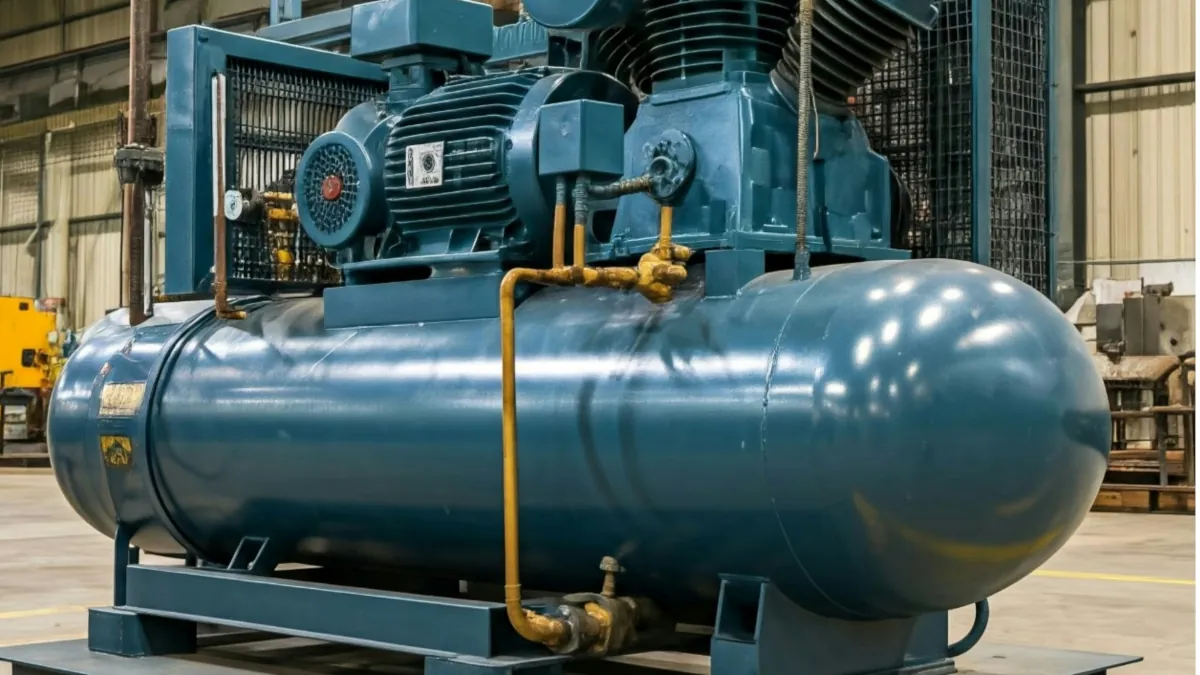
Compressed air is a telling example. According to the Swiss Federal Office of Energy (SFOE), leaks in practice account for 15 to 70% of the compressed air produced, a share operators are often unaware of. The SFOE recommends checking the network every year, and at the latest when the compressor starts at night while the company is shut down. On an hourly load curve, this signal can be spotted without a site walk.
On a farm in New South Wales, meters fitted to refrigeration, lighting and pumps revealed around 70,000 kWh of waste caused by pump cycling.
Savings quantified by public bodies
According to the New South Wales Government, metering projects commonly deliver 5 to 10% savings at site level, and up to 15 to 30% in some cases.
| Level of use of metering | Typical energy savings | Source of gains |
|---|---|---|
| Meter installation only | 0 to 2% | Awareness, short-lived savings |
| Billing and cost allocation by use | 2 to 5% | Ongoing awareness |
| Regular consumption feedback and adjustment of installations | 5 to 15% | Simple operational and maintenance actions |
| Real-time monitoring and continuous optimisation | 15 to 30% and more | Projects with verified results, constant management attention |
The gap between the first and last rows comes down to how the data is used. A meter whose readings nobody looks at delivers little. Gains appear when measurements flow continuously into energy management software and trigger actions.
The European Commission's Joint Research Centre (JRC) points in the same direction. In its best environmental management practices for the food and drink industry, it recommends installing meters at process level and monitoring regularly to identify the main consumption items. It estimates that incremental energy efficiency measures quickly deliver more than 5 to 10% savings, and that deeper transformations reach 20 to 30%, or even half of the bill.
Gains achieved
Lawrence Berkeley National Laboratory (LBNL), a US Department of Energy laboratory, studied nine industrial sites involved in the Superior Energy Performance (SEP) programme. This programme combines ISO 50001 with third-party verification of results.
All sites gained more savings from operational improvements than from investments, and nearly three quarters of the savings came from operations. They saved an average of 503,000 dollars per year, with an average payback of 1.7 years, including time spent by internal staff.
A 2023 publication from the same laboratory notes that more than 70% of the savings achieved under an energy management system come from projects with no capital investment.
Savings that last over time
This 2023 study, published in the peer-reviewed journal Sustainable Energy Technologies and Assessments, covers 83 ISO 50001 certified factories whose results were verified by a third party.
Their energy performance improves on average by around 4.1% in the first year, and still by around 3.4% per year twelve years after implementation.
The study notes another point. Sites whose energy lead changed between two certifications achieve results close to those where the person stayed in post. The authors find no significant correlation between performance and the stability of this person. A management system fed by measured data becomes part of the factory's processes and does not rely on a single individual.
Targeting maintenance and investment
Metering data helps to size equipment replacements correctly and avoid unnecessary spending, the New South Wales guide points out. On the farm mentioned above, staggered compressor start-up reduced peak demand by 15% and avoided replacing a piece of equipment.
At a building materials manufacturer, sub-metering of the boilers led to adding an economiser to recover lost heat. Gas consumption fell by 10,000 GJ per year, or 11%. The site also reduced its maintenance workload and extended the life of its boilers.
Proving the results of actions
Digital monitoring makes it possible to check that an action has had the expected effect. The New South Wales fact sheet notes that equipment-level measurements make it possible to measure and verify savings after a retrofit.
Sources
- New South Wales Government, The business benefits of energy metering, a guide for executives, 2025.
- New South Wales Government, Office of Environment and Heritage, Fact sheet, Electricity metering and monitoring, 2018.
- Swiss Federal Office of Energy (SFOE), SwissEnergy, Operational optimisation measures for companies, compressed air, 2021.
- European Commission, Joint Research Centre (JRC), Best Environmental Management Practice, Deploying energy management and improving energy efficiency throughout all operations, 2018.
- Lawrence Berkeley National Laboratory, Superior Energy Performance Program Demonstrates 1.7-Year Payback, 2014.
- Fitzgerald P., Therkelsen P., Sheaffer P., Rao P., Deeper and persistent energy savings and carbon dioxide reductions achieved through ISO 50001 in the manufacturing sector, Sustainable Energy Technologies and Assessments, vol. 57, 2023.
Connected sub-meters, analysis software and optimisation
Connected electricity and multi-fluid sub-meter
Lynx connected sub-meters are designed and manufactured by Qualisteo in Nice. The Lynx-e electricity sub-meter measures electricity consumption by area or by use. Lynx+ covers fluids, including water, gas and compressed air or fuel oil.
Installation is non-intrusive and carried out without interrupting site activity. Data is read remotely and continuously.
Energy management software
Wattseeker is the energy management software developed by Qualisteo and offered as SaaS. It receives data from the sub-meters and displays consumption in real time, for one site or a group of sites. Teams set up alarms and track their consumption reduction action plan.
Implementing an ISO 50001 compliant EnMS
Qualisteo's energy efficiency engineers support the implementation of an energy management system compliant with ISO 50001.
Support begins with an energy maturity assessment. It continues with training on the standard, implementation of the system and an internal audit to prepare for the certification audit. ISO 50001 certification is then issued by an accredited third-party body.