Energy sub-metering is a must to achieve ISO 50001 certification
A successful ISO 50001 certification relies first on the quality of consumption data, which requires a high-performing sub-metering infrastructure.
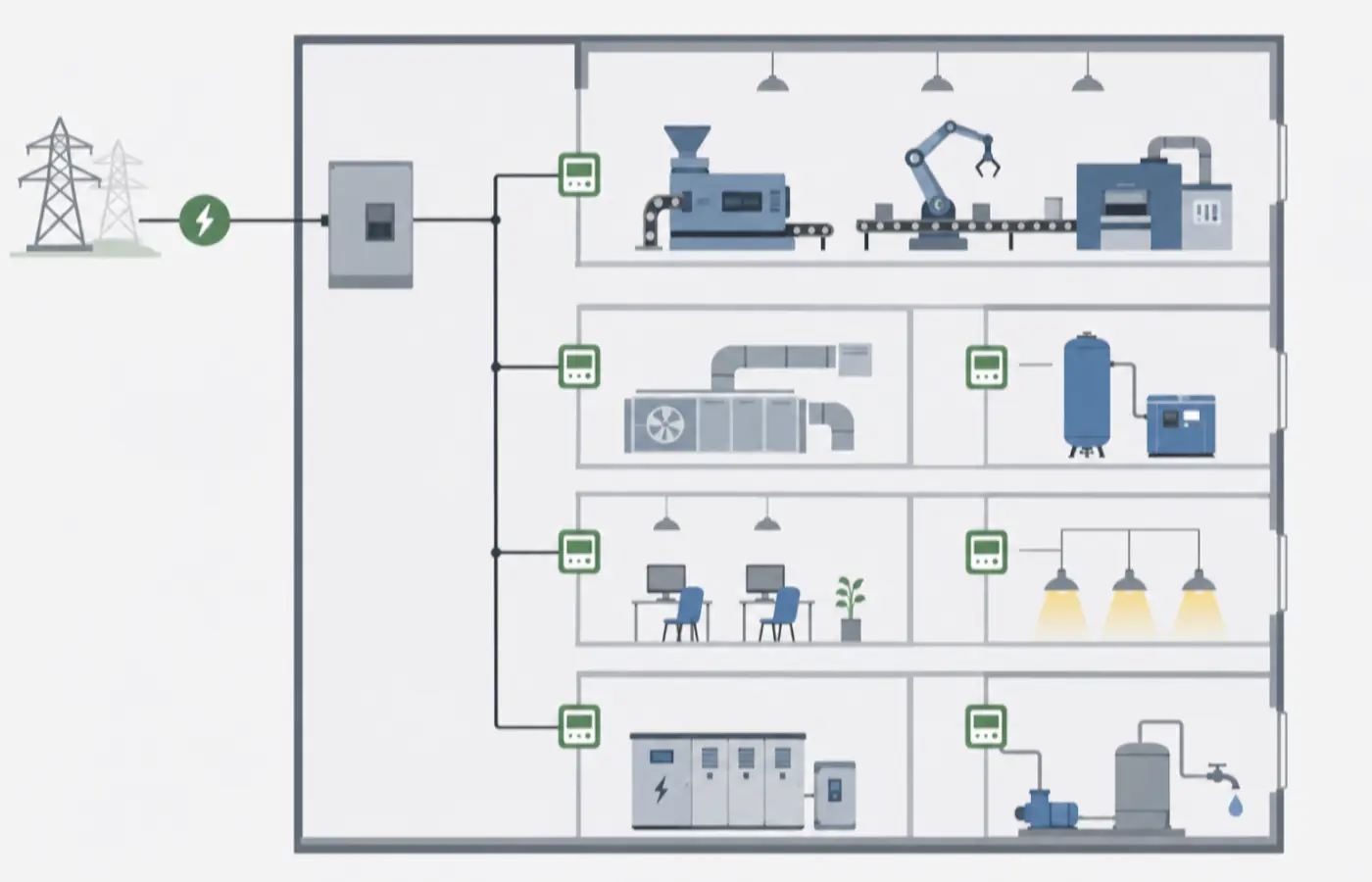
Industrial companies embarking on an ISO 50001 certification process often face the same obstacle: how to identify where energy waste is hiding and verify that an action plan delivers lasting results.
Sub-metering electricity, water, gas or compressed air consumption points answers this challenge.
A reminder of the logic behind ISO 50001
ISO 50001 describes an energy management system based on continuous improvement. It requires the organisation to carry out an energy review, to set measurable energy consumption reduction targets, then to check regularly that those targets are met.
Qualisteo can support you in implementing ISO 50001 within your company.
Sub-metering is the essential technical building block of sound energy management
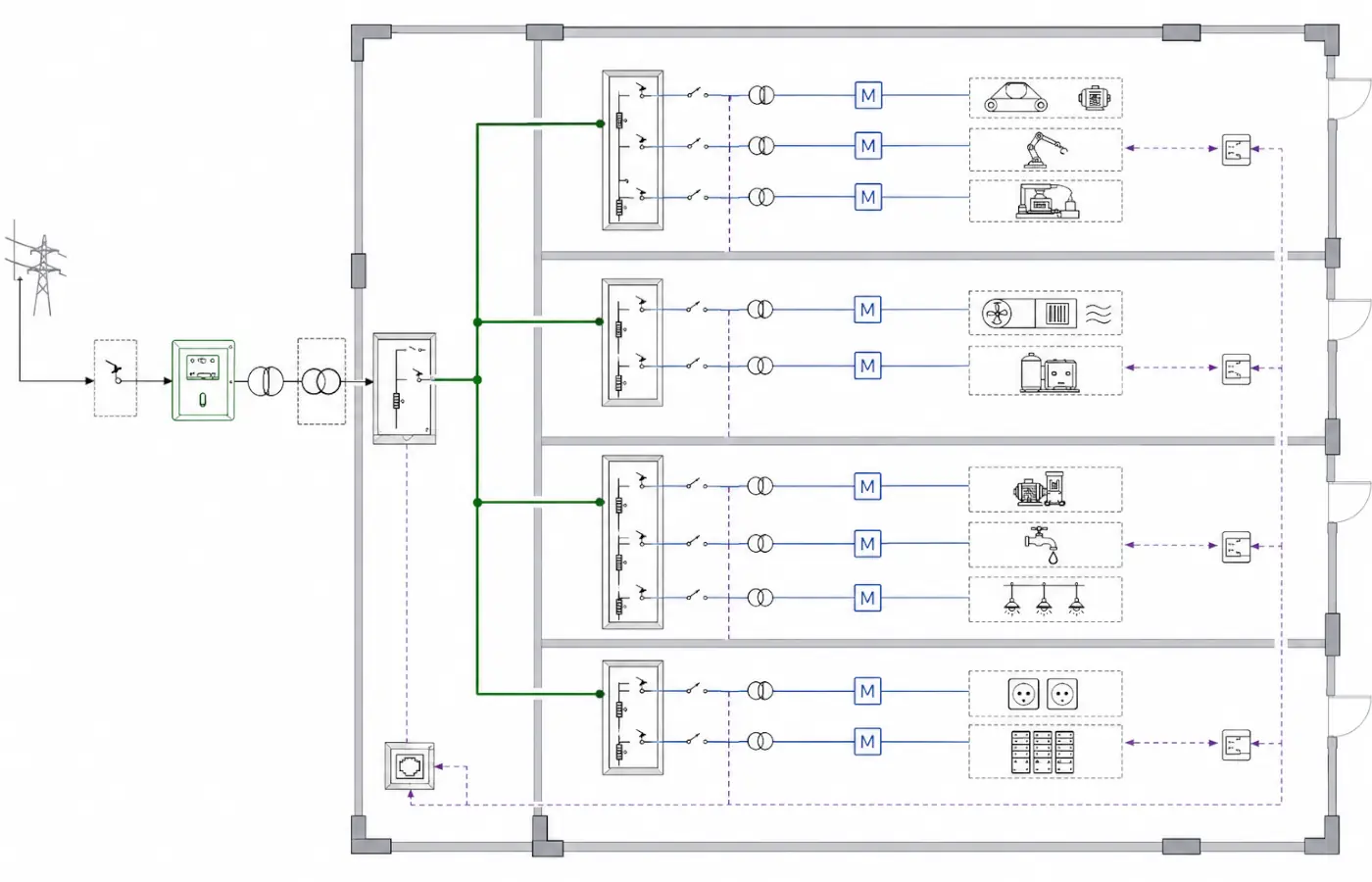
Sub-meters make it possible to measure energy consumption and to monitor the continuous improvement process required by ISO 50001 certification.
Their role is key. They collect the data used to track energy performance indicators (EnPIs) and significant energy uses (SEUs) precisely enough to identify energy savings and verify that they are sustained over time. ISO 50001 expects a precise breakdown of these figures by area, by production line or by use.
Source: “Mettez en place un Système de Management de l'Énergie (SMÉ)”, ADEME, 2025
In the field, companies are still largely under-equipped
Most companies only have readings from their main meters, with no real measurement strategy behind them. Many struggle to define their own energy performance indicators because they lack information detailed enough to calculate them.
Yet the importance of energy metering has been recognised for decades, without the resources committed matching that recognition.
This situation explains why sub-metering becomes a central topic as soon as a company starts its ISO 50001 certification.
Adding electricity sub-meters or fluid sub-meters to the most energy-intensive equipment makes it possible to move beyond this approximate approach and to build a genuinely effective measurement plan.
What to do to optimise energy day to day
Installing sub-meters is not enough if the data they produce stays confined to a spreadsheet.
An energy management software such as Wattseeker, developed by Qualisteo, relies precisely on sub-meter readings to build load curves by use, detect consumption drifts and document the energy review required by ISO 50001.
Meeting your commitments over the long term
For an organisation to improve its energy efficiency over the long term, it must define its SEUs, measure them and implement actions to improve their performance.
In practice, this means that sub-meters must be positioned relevantly so that the data collected genuinely measures these SEUs and reports the energy savings achieved following optimisation actions.
Qualisteo's teams are made up of engineers specialising in energy efficiency. Together with your organisation, they determine the most relevant places to install sub-meters.
Easily deploying a network of non-intrusive sub-meters
Sub-metering has seen many innovations in recent years: it has become easier and cheaper to deploy.
Technologies now exist to install sub-meters in an organisation without any work on existing installations.
Qualisteo has developed the Lynx, a non-intrusive multi-energy sub-meter. Installing it requires no major works and does not interrupt your production.
The components that measure your energy consumption are simply placed alongside your installations. Your machines, your tools and your electrical network therefore keep running while the Lynx sub-meters are installed.