How JM Polymers accelerated its ISO 50001 certification with Qualisteo tools
At JM Polymers, real-time measurement provided the foundation for ISO 50001 certification obtained in March 2025.
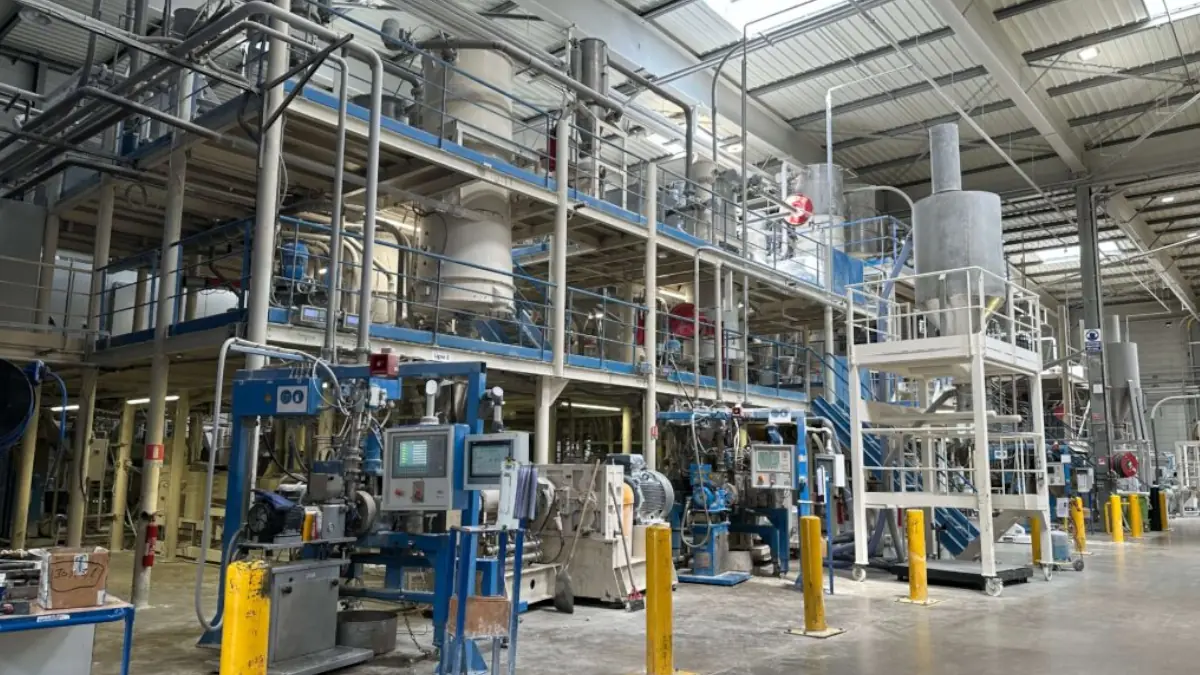
JM Polymers manufactures plastics. Like many industrial companies, it was hit by rising energy prices in 2022 and initially adopted Qualisteo tools to reduce its costs. It then used them to build its energy management system, certified to ISO 50001 in March 2025. In a video, Zineb Mrabbaj looks back at the reasons behind this approach and the role of the Wattseeker platform at each stage.
Why JM Polymers committed to ISO 50001 certification
The starting point dates back to 2022. Like much of French industry, the company was then facing soaring energy prices.
According to INSEE, in 2022 the energy bill of industrial establishments with 20 or more employees increased by 54%.
To regain control of its costs, JM Polymers chose Qualisteo.
Initially, the company was simply seeking one-off savings. But faced with the potential for energy savings, the JM Polymers factory embarked on ISO 50001 certification to sustain its sound energy management policy over the long term.
Also read: In Europe, the ISO 50001 certification requirement is becoming stricter
How Qualisteo tools accelerated ISO 50001 certification
The tools provided by Qualisteo, particularly Wattseeker energy management software, helped simplify and accelerate the steps required to obtain ISO 50001 ‘Energy management’ certification.
Identify significant energy uses more quickly
ISO 50001 requires an energy review during which the organisation identifies its significant energy uses (SEUs). At JM Polymers, this phase would have taken several weeks without Qualisteo tools. With real-time measurement and visualisation by machine and equipment, the team quickly identified its SEUs.
Wattseeker displays consumption by area, use or equipment, at time intervals as short as one minute.
This granularity is made possible by sub-metering infrastructure covering the main energy-consuming systems. Qualisteo equipped this factory with connected electrical sub-meters and also produces fluid sub-meters (water, gas, compressed air, fuel oil…).
The software also includes a dashboard dedicated to automatically monitoring SEUs.
Establish the baseline and indicators
The standard then requires an energy baseline and energy performance indicators (EnPIs). JM Polymers defined these using the data collected.
Wattseeker allows users to create customised EnPIs and monitor deviations. Its most comprehensive modules correlate consumption with several factors, such as weather or production levels, to model the energy baseline. Savings calculations follow the IPMVP protocol, a recognised and standardised method that neutralises these variations.
Also read: Sub-metering is essential for ISO 50001 certification
Monitor actions through to the audit
The agreed actions were then monitored automatically in Wattseeker. Each was measured in real time, enabling the relevance of the selected solutions to be assessed quickly.
The action plan is digitised in the platform, which quantifies the savings achieved and produces a report dedicated to monitoring improvement actions. On this basis, JM Polymers passed its pre-audit and then obtained ISO 50001 certification.
Like JM Polymers, get support to implement an ISO 50001-certified EnMS
Qualisteo supports companies in implementing an ISO 50001-certified energy management system (EnMS).
An initial energy assessment first reviews the company's maturity in controlling energy expenditure, both in its documentation and on site. Training designed to be engaging then helps teams understand the standard and adopt the right practices. The core of the support consists of building the system on existing practices, with a tailored approach that takes the company's constraints into account. If needed, a sub-metering network and Wattseeker software can be deployed.
Full video transcript
Zineb Mrabbaj, JM Polymers:
‘So, like many industrial companies, we were severely affected by the spectacular rise in energy prices in 2022. We chose Qualisteo for several reasons. Mainly because it allows us to monitor our consumption in near real time, down to the minute. It offers a simple, intuitive and ergonomic interface, as you can see, with plenty of visual management.
Originally, we chose the Qualisteo solution to reduce our energy costs. But deploying Qualisteo revealed much broader potential. Beyond reducing our costs, it allowed us to manage our consumption precisely and gain visibility and responsiveness. These results led us to make the approach sustainable and aim for ISO 50001 certification.
Our journey towards ISO 50001 was structured around six key stages, from management commitment to obtaining the certificate in March 2025. Of course, it all began with the fundamental stage: management commitment and the initial energy assessment.
Traditionally, identifying significant energy uses is a lengthy and complex phase, requiring several weeks for JM Polymers. Thanks to Qualisteo, this stage was drastically simplified and accelerated. Real-time measurement and visualisation by machine and equipment enabled us to identify our significant energy uses quickly, with reliable, immediately usable data. Using this data, we defined our energy baseline and performance indicators with an achievable target.
But of course, success also depends on people. Qualisteo was a tremendous awareness-raising tool, and we relied on Qualisteo to raise awareness among our staff and involve everyone in the process. Let me return to the example mentioned earlier. Thanks to Qualisteo, we could see that a single weekend closure had unnecessarily cost us €1,500, equivalent to a household's annual consumption. This example made a lasting impression and helped teams understand the real impact of every energy-related action.
This phase led to the implementation of actions and their automated monitoring through Qualisteo. In fact, every action implemented was measured in real time, making it possible to assess the relevance of the proposed solutions. This efficiency enabled us to pass the pre-audit and obtain ISO 50001 certification.
In conclusion, with ISO 50001, we have control over our energy consumption. We have achieved tangible results. We reduced our consumption by 5%, equivalent to more than €100,000. Thanks to the certificate, we also received a €40,000 grant.
This success rests on a considerable collective effort. There is documentary complexity, and it requires rigorous technical monitoring. Of course, you can get support with this. The ISO 50001 process also requires staff involvement and an initial cost that will subsequently be offset by savings and financial support.’